Purdue University PURDUE AGRICULTURE
FORESTRY &
NATURAL RESOURCES


John B Dunning

Associate Professor

Department: Forestry and Natural Resources
Phone: 765.494.3565
Fax: 765.496.2422
Office: FORS 102
E-mail: jdunning@purdue.edu

Area of Expertise: Wildlife Ecology
Curriculum Vitae


Research Group Facilities Areas of Excellence Related Centers
Research:

John B. “Barny” Dunning is an Associate Professor of Wildlife Ecology in the Department of Forestry and Natural Resources at Purdue. He received a B.S. in Biological Sciences from Kent State University (Kent, Ohio) in 1978, where he graduate summa cum laude and was elected a member of Phi Beta Kappa. He then received a Ph.D. in Ecology and Evolutionary Biology from the University of Arizona (Tucson, Arizona) in 1986. Prior to coming to Purdue, Dr. Dunning held positions as a postdoctoral research associate and research scientist at the University of Georgia’s Institute of Ecology. During that time, he worked on the wildlife impact of forest management across large spatial scales at the Savannah River Ecology Laboratory in Aiken, South Carolina. This research was funded by grants from the Department of Energy, U.S. Forest Service and the National Science Foundation. He joined the faculty at Purdue in 1994, and was promoted to Associate Professor in 1999.

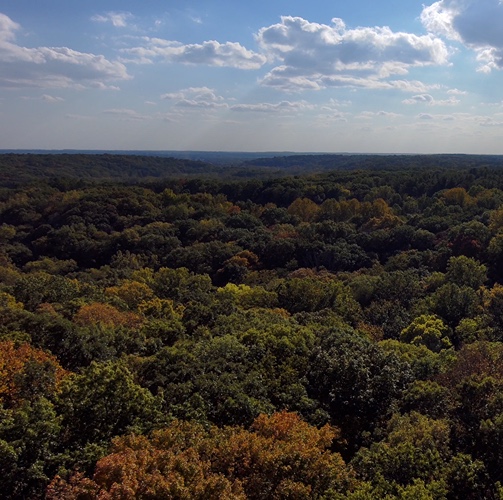
Barny teaches courses in environmental conservation, ornithology, global environmental issues, and conservation biology. In 2006, he was voted the department’s Outstanding Undergraduate Teacher by the undergraduate student body, and received the Richard L. Kohls Outstanding Undergraduate Teacher Award by the College of Agriculture. He has published over 75 research papers and 3 books. His research focuses on the effects of habitat change across large landscapes on native wildlife species. Much of this research has focused on various species of sparrows in grasslands, wetlands and other open habitats. Sparrows are representative of a large group of native songbirds found in non-forested habitats that have declined greatly in recent decades. His early work included collaborations with computer modelers to merge field-based ecological knowledge with simulation of projected landscape change to predict which species will be impacted most severely by proposed human land-use. More recently, Barny has made use of habitat restoration projects involving both Midwestern grasslands and wetlands to examine how native birds respond to the creation of habitat in new locations within landscapes. He is involved in the establishment of a long-term field experiment on forest management and its impacts on Indiana wildlife (the Hardwood Ecosystem Experiment) as a component of the Sustainable Hardwood Ecosystems area of excellence.


- Recent Publications

Dunning, J. B., & D. M. Packett (2009). Stopover habitat selection by migrant landbirds in a fragmented forest-agricultural landscape. Auk, 125(3), 579-589.

Packett, D. M., & J. B. Dunning (2009). Rest stops on the continental highway: migratory birds and small woodlots. Ohio Woodland Journal.

Dunning, J. B., D. M. Scheiman, & A. Houston (2009). Demographic and disperal data from anthropogenic grasslands: what should we measure?. Sources, Sinks, and Sustainability across Landscapes. Cambridge, MA: Cambridge University Press.

Dunning, J. B. (2008). Use of education technology to "discuss" controversial topics in large-enrollment natural resource classes. 7th Biennial Conference on University Education in Natural Resources. http://hdl.handle.net/1957/8455

Dunning, J. B. (2008). Birding Basics. Becoming an Outdoor Woman.

Dunning, J. B. (2008). Student evaluation of audience response technology in large lecture classes. Education Technology, Research and Development, 56, 125-145.

Dunning, J. B. (2008). Forecasting the likely impacts of climate change on Indiana agriculture. http://www.agecon.purdue.edu/extension/pubs/paer/2008/august/shively.asp

Dunning, J. B. (2008). The influence of learning characteristics on evaluation of audience response technology. Journal of Computing in Higher Education, 19(2), 25-46.

Dunning, J. B. (2008). Small Woodlots: Important Rest Stops for Migratory Songbirds.

Packett, D. M., & J. B. Dunning (2008). Small woodlots: important rest stops for migratory songbirds.


+ Patents


- Awards & Honors

Outstanding Undergraduate Teacher (2009). Department of Forestry & Natural Resources.

Outstanding Undergraduate Teacher (2008). Department of Forestry and Natural Resources, Purdue.

Fellow (2007). American Ornithologists' Union.

Outstanding Undergraduate Teacher Award (2006). Department of Forestry and Natural Resources.

President (2005). Indiana Chapter of The Wildlife Society.

President-Elect (2003). Indiana Chapter of The Wildlife Society.


+ News Releases